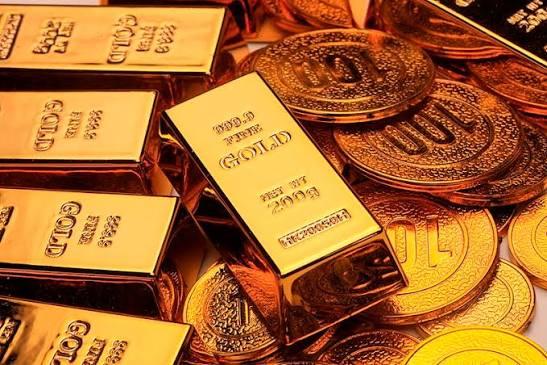
International gold prices declined on Friday, July 31. Spot gold moved toward $4,080 per ounce, while COMEX gold futures also traded lower. A rebound in the US dollar was the principal short-term headwind.
However, disagreement within the Federal Reserve, inflation above target and geopolitical uncertainty continued to provide medium and long-term support.
Data convention: Prices represent an intraday snapshot at approximately 3:00 p.m. Malaysia and Beijing time, or UTC+8. European and US trading sessions were still in progress, so the figures are not final closing prices.
Market Overview
| Market Indicator | Intraday Price | Daily Change | Daily Range |
|---|---|---|---|
| Spot gold XAU/USD | Approximately $4,078/oz | -0.6% | $4,072-$4,112 |
| COMEX gold futures GCQ6 | $4,080.40/oz | -0.48% | $4,071.15-$4,110.50 |
| COMEX silver futures | $58.598/oz | -0.71% | Intraday data |
| US Dollar Index | Approximately 100.02 | +0.30% | Intraday data |
| US 10-year Treasury yield | Approximately 4.649% | Down around 1.4 bps | Intraday data |
| Gold-silver ratio | Approximately 70.2 | Slightly higher | Estimate |
Spot prices were cross-checked using Gold API and Investing.com XAU/USD. Futures, dollar and Treasury data were obtained from Investing.com Gold Futures.
Global and Macro Context
The Fed Held Rates Steady, but Hawkish Dissent Increased
The Federal Reserve maintained its target range at 3.50%-3.75% on July 29. Nine officials supported the decision, while three preferred a 25-basis-point increase. Axios FOMC report
US Inflation Moderated
The June PCE price index increased 3.7% year over year, down from 4.1% in May. Cooling inflation was supportive for gold, but the reading remained substantially above the Fed's 2% objective. US Bureau of Economic Analysis
A Stronger Dollar Pressured Gold
The Dollar Index gained approximately 0.3% and moved back above 100. A stronger dollar makes gold more expensive for buyers using other currencies.
Treasury Yields Remained Elevated
The US 10-year yield traded near 4.65%. Although it declined slightly during the session, elevated yields increased the opportunity cost of holding non-yielding gold.
Gold Price Performance
Spot Gold
Spot gold traded near $4,078 per ounce, down approximately 0.6%. Prices briefly tested levels above $4,110 before retreating as the dollar strengthened and investors took profits.
Gold remained approximately 21% higher over 12 months but was around 27% below its January 2026 record near $5,595. XAU/USD historical data
COMEX Gold Futures
Front-month COMEX gold futures traded at $4,080.40, down $19.70 or 0.48%. The session range was $4,071.15-$4,110.50.
During July, futures traded within a broad range of approximately $3,960-$4,215, reflecting continued uncertainty surrounding rates, the dollar and geopolitical developments.
Silver and the Gold-Silver Ratio
Silver futures traded near $58.60 per ounce, down 0.71%. Silver underperformed gold as industrial-demand and broader risk factors affected its price.
The gold-silver ratio was approximately 70.2. A rising ratio generally indicates stronger defensive demand for gold or relative weakness in silver.
ETF and Institutional Flows
According to the World Gold Council, physically backed global gold ETFs recorded approximately $8.9 billion of outflows in June, while holdings declined by 74 tonnes to 4,047 tonnes.
Despite the June withdrawals, global gold ETFs retained approximately $8 billion of net inflows during the first half of 2026, with holdings increasing by 18 tonnes. World Gold Council ETF report
Gold-Related Assets to Watch
| Asset | Code | Reason |
|---|---|---|
| Spot gold | XAU/USD | Primary international gold-price benchmark |
| COMEX gold futures | GCQ6 | Institutional trading and price discovery |
| Spot silver | XAG/USD | Precious-metals sentiment and industrial demand |
| SPDR Gold Shares | GLD | One of the largest gold-backed ETFs |
| iShares Gold Trust | IAU | Lower-cost gold ETF exposure |
| VanEck Gold Miners ETF | GDX | Gold-mining equities and operational leverage |
Market Drivers
- The Dollar Index moved back above 100.
- The Fed held rates steady, but three officials supported a rate increase.
- US PCE inflation moderated from 4.1% to 3.7%.
- Treasury yields remained elevated.
- Middle East developments and energy prices influenced inflation expectations.
- Gold ETFs recorded short-term outflows, while first-half flows remained positive.
Outlook
Short-term technical reference areas at the reporting cutoff were:
| Market | Support | Resistance |
|---|---|---|
| Spot gold | $4,050-$4,070 | $4,110-$4,120 |
| Secondary levels | $4,000-$4,030 | $4,150-$4,170 |
| Silver | $57.0-$57.5 | $59.0-$60.0 |
A recovery above $4,110-$4,120 could open the way toward $4,150. A break below $4,050 would bring the psychological $4,000 level back into focus.
The near-term outlook remained sensitive to the dollar, real Treasury yields and US economic data. Central-bank purchases, fiscal risks and geopolitical uncertainty offered longer-term support, while high interest rates and ETF outflows could limit rallies.
For market observation only; not investment advice.